Related Concepts
Lead Wrist
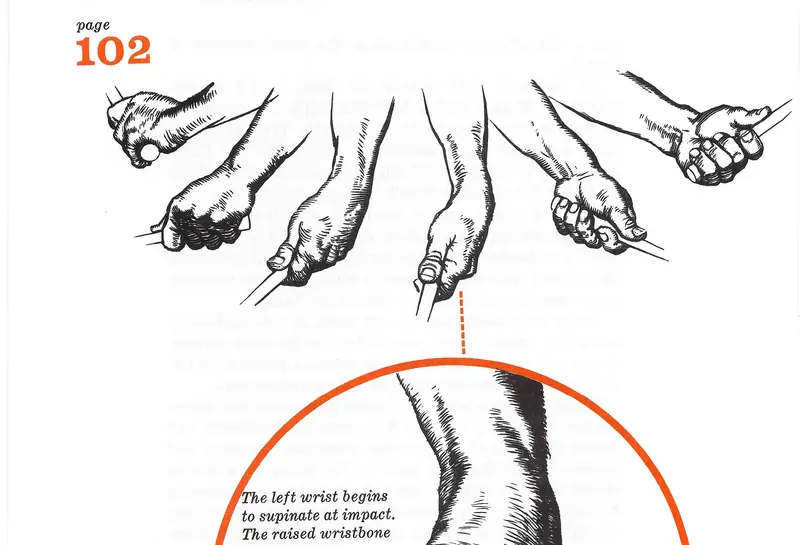
You feel your lead wrist (left wrist for righties) maintain a flat or slightly bowed position from setup through impact — like you're karate-chopping through the ball. What's actually happening is your lead wrist is staying in extension or moving into flexion, which keeps the clubface square and maintains the structural integrity of your swing. A cupped lead wrist (dorsiflexion) typically opens the clubface and weakens your impact position. The lead wrist position directly controls clubface orientation and determines how much forward shaft lean you can maintain at impact.
Why It Matters
Lead wrist position is arguably the most important fundamental because it directly controls the clubface throughout the swing. A weak, cupped lead wrist at impact costs you distance, accuracy, and consistency — you'll hit thin shots, lose compression, and struggle with a slice. When your lead wrist is properly positioned, you can compress the ball, control trajectory, and generate effortless power. Tour players almost universally show a flat to bowed lead wrist at impact, while high-handicappers typically show cupping.
Common Misconceptions
You should keep your lead wrist perfectly flat throughout the entire swing
The lead wrist naturally cups slightly in the backswing for most golfers, then flattens or bows through impact. It's about the transition and impact position, not maintaining one position throughout.
A bowed lead wrist automatically fixes your slice
Lead wrist position works with your grip — if you have a weak grip and force a bowed wrist, you might hit hooks. The wrist and grip must work together to square the clubface.
Strong players naturally bow their lead wrist more
It's about timing and coordination, not strength. Many powerful players have relatively flat lead wrists at impact, while some shorter hitters show significant bowing. It's about matching your grip and swing plane.
Expert Perspectives
George Gankas (GG SwingTips)
"The lead wrist should be flat to slightly bowed at impact for maximum compression and control"
Mike Malaska (Malaska Golf)
"Some golfers need to feel more cupping in the backswing to shallow the club properly, and a perfectly flat impact position isn't necessary for all swing types"
Eric Cogorno (Eric Cogorno Golf)
"TrackMan data shows tour players average 15-20 degrees of forward shaft lean at impact, requiring a flat to bowed lead wrist"
Monte Scheinblum
"Forcing lead wrist positions can create compensations elsewhere in the swing — better to train proper body rotation that naturally flattens the lead wrist"
Practice Drills
01 — Impact Bag with Lead Wrist Focus
Set up to an impact bag with your lead hand only on the club. Feel your knuckles pointing down toward the ground at impact — this is a flat to bowed position. Hit the bag slowly, focusing on that lead wrist position. Graduate to adding your trail hand while maintaining that lead wrist feel.
Recommended gear
Affiliate link — we may earn a commission
02 — Wall Drill for Lead Wrist
Stand arm's length from a wall, place your lead palm flat against it with fingers pointing up. This is the impact position feeling you want. Practice your swing motion while keeping that wrist flat against the wall, then replicate that feeling with a club.
03 — Split-Grip Lead Wrist Training
Grip the club with your hands separated by about 6 inches. Make slow swings focusing only on your lead wrist position through impact. The separation forces you to feel each hand independently and prevents your trail hand from flipping the lead wrist.
Sources