Related Concepts
Grip
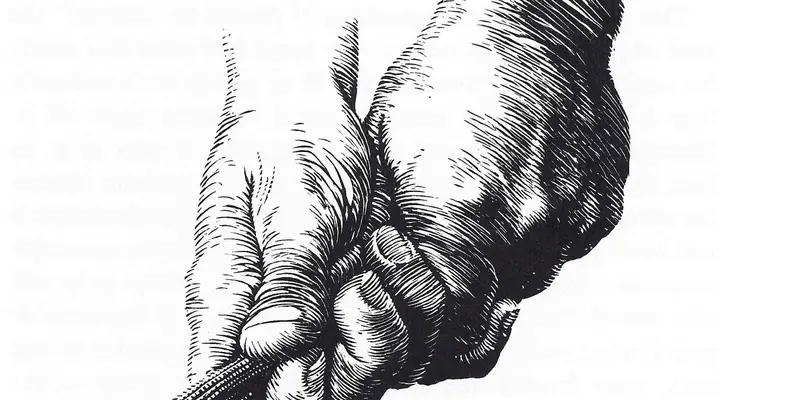
Your grip is how connected you feel to the club — it's the only physical link between your body and the clubface. You should feel like the club is an extension of your arms, with your hands working as a single unit rather than fighting each other. The actual mechanism involves positioning your hands so the club sits in your fingers (not palms), with your lead hand controlling the clubface and your trail hand providing power. When done correctly, you'll feel a slight pressure in your last three fingers of the lead hand and the middle two fingers of your trail hand, while your thumbs barely squeeze at all.
Why It Matters
Your grip directly controls the clubface, which is responsible for roughly 85% of your ball's starting direction. A grip that's too weak (hands rotated left) will leave the face open, causing slices and weak shots to the right. A grip that's too strong (hands rotated right) will close the face, leading to hooks and shots that dive left. More importantly, your grip determines how your wrists can hinge and release through impact — the wrong grip forces compensations throughout your entire swing sequence. When golfers struggle with consistency, the grip is often the silent culprit undermining every other swing improvement they're trying to make.
Common Misconceptions
You should grip the club tightly for more control and power
Light grip pressure allows your wrists to hinge naturally and creates more clubhead speed. Feel like you're holding a small bird — firm enough it won't fly away, gentle enough you won't hurt it.
The grip should sit in your palms for a secure hold
The club should run diagonally through your fingers, especially in your lead hand. Palms create tension and reduce feel — fingers give you mobility and control.
Everyone should use the same neutral grip position
Your ideal grip depends on your natural hand position when your arms hang relaxed at your sides. Some golfers need slightly stronger or weaker positions to match their body mechanics.
Expert Perspectives
Eric Cogorno (Eric Cogorno Golf)
"The grip should be fundamentally neutral for most golfers, showing 2-3 knuckles on the lead hand"
George Gankas (GG SwingTips)
"Many golfers need a stronger grip to match modern swing mechanics and help square the face with today's equipment"
Mike Malaska (Malaska Golf)
"Grip pressure should be light and consistent throughout the swing"
Monte Scheinblum
"Grip pressure should vary dynamically, firming up through impact for control"
Clay Ballard (Top Speed Golf)
"The lead hand should dominate grip control with the trail hand providing support"
Athletic Motion Golf
"Both hands should work equally as a unified system with neither dominating"
Practice Drills
01 — Arms Hanging Natural Grip Check
Stand upright and let your arms hang completely relaxed at your sides. Notice how your hands naturally turn — this is your neutral position. Now grip the club matching that natural hand position. You should see roughly 2-3 knuckles on your lead hand when looking down.
02 — Light Pressure Swings
Take your normal grip, then consciously lighten your pressure to about a 4 out of 10. Make slow swings focusing on maintaining this light pressure throughout. You should feel the club's weight more distinctly and notice increased wrist mobility. Gradually increase swing speed while keeping pressure light.
03 — Interlock vs Overlap Test
Try both the interlocking grip (pinky of trail hand interlocks with index finger of lead hand) and overlapping grip (pinky overlaps). Make swings with each and notice which feels more unified. Smaller hands typically prefer interlock, larger hands often prefer overlap.
Recommended gear
Affiliate link — we may earn a commission
Sources